When a Lower League Player Challenges the Pros: Vilfred Bruun's Goal of the Year Nomination
Frederik Hvillum

In Denmark's Goal of the Year competition, four professional players from major clubs face a centre-back from FC Holte who promised his teammates he'd score from distance, then delivered in the 83rd minute of a crucial promotion battle.
The nominees for Denmark's Goal of the Year at SPORT 2025 read like a who's who of Danish football: Franculino from FC Midtjylland, Nadia Nadim from HB Køge, Isak Jensen from Viborg FF, Sara Holmgaard from Real Madrid. And then there's number five: Vilfred Bruun from FC Holte.
Four professional players from both Danish and international top clubs. One amateur from a serie team. Yet Bruun's nomination represents more than just a spectacular goal. It marks a shift where golden moments at grassroots level can now compete on the same stage as the elite.
This isn't by chance. DR Sporten deliberately opened a slot for Denmark's Goal of the Year from the lower leagues, recognizing that spectacular moments happen at every level of Danish football. The decision reflects how Veo's video technology has become integrated across Danish football, making these moments visible and preservable.
In 2019, a Veo camera captured Kevin Andreasen's stunning long-range strike for Agerbæk/Starup Fodbold in their cup match against Næsby, a goal that went on to win Goal of the Year in the Danish Cup. Since then, Veo has become an established part of Danish football at all levels. Thousands of cameras now capture matches across all divisions, fundamentally changing the conditions. What was once reserved for professional clubs with large budgets is now available to everyone. When every spectacular moment can be documented with the same quality regardless of level, talent development and recognition are no longer determined by where you play, but by what you deliver on the pitch.
The Moment
The week leading up to the match, Bruun had made a decision. As a centre-back, long-range strikes aren't typically part of his game. But he'd watched it happen occasionally, midfielders or defenders catching goalkeepers off guard from distance, and he thought: why not?
"It was actually a decision I had made in the week leading up to the match, that I would try a long shot in the game," Bruun explains. "You see it occasionally from centre-backs, kicking from far out, so I thought I'd give it a shot myself."
What followed was, in Bruun's own words, perhaps a bit cocky. "I'd been a bit cheeky before the match and told some people from the team that they should look forward to my long-range goal today, which, in hindsight, couldn't have been written better."
Throughout the entire match, he waited. His teammates knew what was coming. The opportunity just needed to present itself.
The 83rd minute arrived. FC Holte trailed 2-1 in a crucial top-of-the-table clash. The kind of match that defines promotion battles. The ball came to Bruun, and the moment he'd been waiting for finally materialized.
"The whole match I was basically just waiting for the chance to pull the trigger. That chance arose in the 83rd minute, and it became an equalizer to 2-2 in an important top clash, which led to promotion."
For Bruun, a player who rarely shoots from such distance, the strike represented something special. "It's the first time I've scored a goal of that caliber, and from such a distance, I must admit. I normally rarely kick that far out, but that was also why I thought it deserved an attempt. You don't score the shots you don't take."
The equalizer changed everything. The match that could have ended in defeat instead fueled FC Holte's successful promotion campaign.
The Reality of Recognition
When the nomination for Denmark's Goal of the Year arrived, Bruun found himself in surreal company. His name alongside professional internationals and top-tier stars. The contrast wasn't lost on him.
"It's a great honor to be nominated for such a prize among big names in Danish football. It's hard not to be a bit proud of it," he says, before adding something more meaningful. "Most of all, it's great to be allowed to represent a small fraction of the incredible goals and crazy details that happen around the country, but never come into the spotlight or perhaps aren't filmed at all."
This recognition carries weight beyond personal achievement. For years, spectacular moments in Danish football lived only as stories, fading memories embellished with each retelling. Now, with video technology capturing matches at every level, these moments can compete on equal footing with professional strikes.
The Power of Preservation
Having the goal captured on a Veo camera transformed it from a fleeting moment into permanent evidence that might end up winning Goal of the Year.
"I probably can't get away from the fact that I've watched it quite a few times," he admits. "Especially right after the match, it was great to be able to go back and rewatch. Now it's flared up a bit again in connection with the nomination, but fortunately I think it can stand up to another viewing."
The technology has fundamentally changed what's possible for players at all levels. "It's obviously a golden opportunity that, despite level and arena, you can go back and rewatch wild goals and cool moments from matches. In the old days, there were a whole lot of great goals and cool details that could never be relived, and fortunately that's no longer the case."
Breaking Down Barriers
Bruun's nomination at SPORT 2025 demonstrates how video technology is democratizing recognition in football. The goal that might once have lived only in FC Holte's collective memory now stands alongside strikes from Denmark's professional elite, judged purely on its merit.
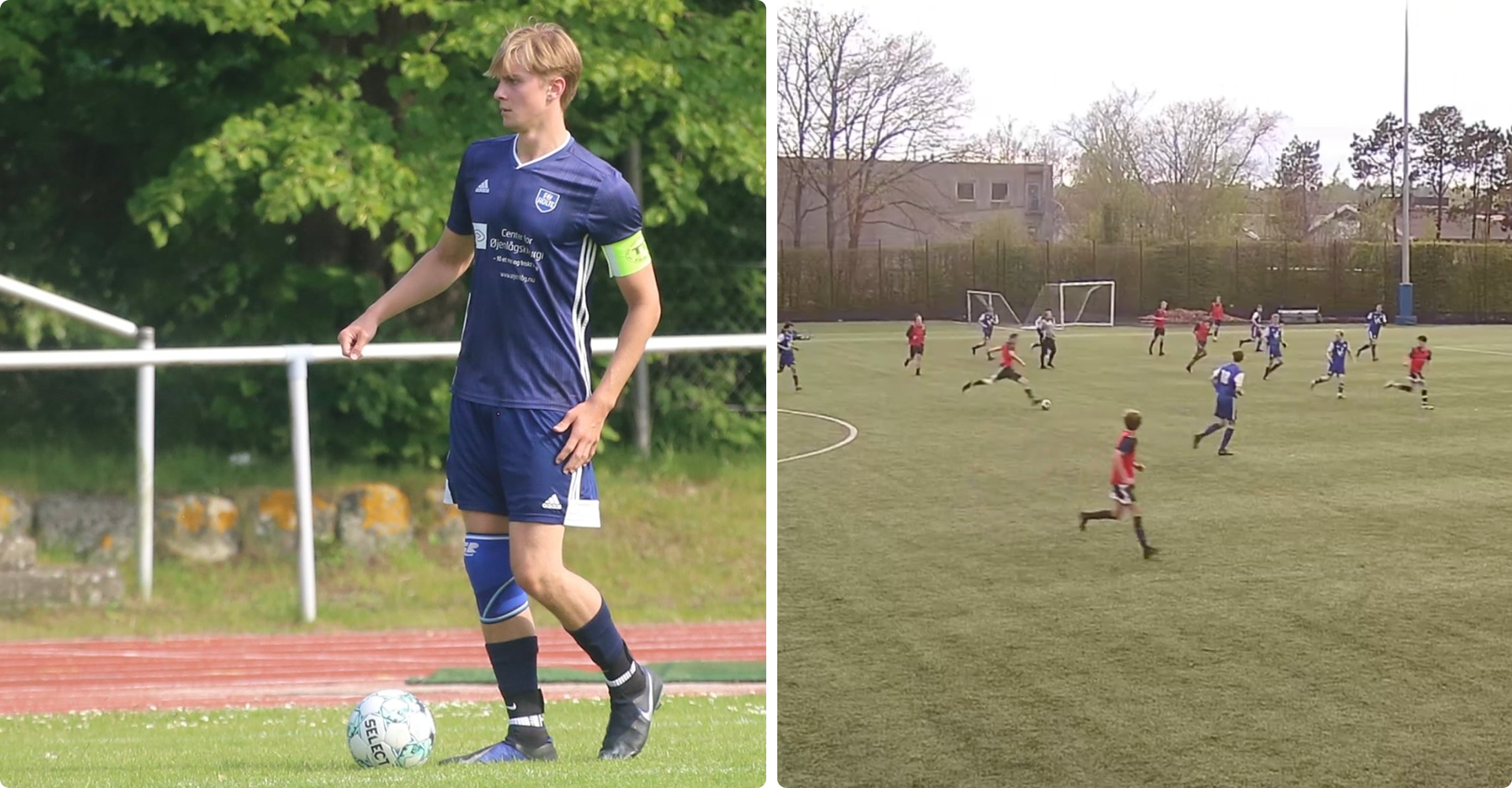
Across Denmark, across the divisions, Veo cameras have become as common as corner flags. The technology has transformed how Danish clubs approach player development, with coaches at all levels now able to provide video analysis that was once exclusive to professional teams. Young players in small towns can now build highlight reels as professional as those from Superliga academies.
The impact extends beyond individual moments of brilliance. Football clubs use Veo footage for talent identification, tactical development, and creating pathways for players who might otherwise go unnoticed. Scouts can review matches remotely, coaches can provide detailed feedback with visual evidence, and players can study their own performances with the same tools available to professionals.
When every match is captured with professional cameras, when every spectacular moment can be preserved and shared, geography, league, and club budget no longer determine which goals get seen. A centre-back in a serie match can promise his teammates he'll score from distance, deliver in the 83rd minute of a promotion battle, and end up nominated for the same award as international players.
"It's great to be able to represent a small fraction of the incredible goals and wild details that happen around the country," Bruun reflects. The humility in his words masks the significance of what his nomination represents: in modern Danish football, brilliance can be recognized regardless of where it occurs.
When a player like Bruun can have his goal judged on equal terms with professional strikes, it validates what Danish football has been building through widespread video adoption. A system where opportunity isn't determined by postal code or club budget, but by what happens on the pitch. Where a promise made to teammates before a lower league match can lead to a nomination alongside Real Madrid players.
As Denmark's football community prepares for SPORT 2025, Vilfred Bruun's story reminds us that the beautiful game's most memorable moments don't respect league tables or professional status. Sometimes they come from a centre-back who promised his teammates something special and delivered when it mattered most.
Vote for your favorite goal here: https://www.dr.dk/sporten/fodbold/her-er-de-nominerede-til-aarets-maal-stem-med-her
SPORT 2025 takes place on January 3rd.